No web page can stop a determined cheater, but it can make cheating harder and record what happened. An honest look at browser-based exam integrity.
Anyone selling online exams gets this question: "How do you stop cheating?" The honest answer is that a web page cannot stop all cheating. It can make it harder, and it can record suspicious behaviour so a teacher can decide what to do. Here is what is possible in a normal browser, without installing special software.
What a browser can detect
While an exam page is open, the browser can report a few events. Quizora records each of them for every attempt:
- Switching tabs or windows: the page knows when it is hidden or loses focus.
- Leaving full screen: if the exam asks for full screen, the page knows when the student exits it.
- Copy and paste: copying question text out, or pasting answers in.
Each event is saved to a violation log, and the teacher sees a report for every attempt. You can also set the exam to submit automatically after a chosen number of violations.
What makes copying answers harder
Detection is only half of it. Exam settings make sharing answers much less useful:
- Shuffle questions and options, so two students do not see the same paper in the same order.
- Set a strict timer, so there is no time to search for each answer.
- Limit attempts, so nobody can sit the test once just to collect the questions.
Restricting who can sit the exam
Many integrity problems are really access problems. Enrolled-only exams can be taken only by students you invited, so a paid test cannot be passed around to friends.
What a browser cannot detect
Be clear about this with your students and clients:
- A second phone or laptop next to the screen.
- Another person in the room.
- Virtual machines or screen-sharing tools set up to hide themselves.
Catching those needs webcam proctoring, a lockdown browser or a supervised room. For high-stakes certification, use one of those. For practice tests, coursework and most training, browser checks plus good exam design are enough, and much easier for honest students.
A sensible policy
- Tell students which events are recorded before they start. Most cheating is opportunistic, and knowing it is logged prevents it.
- Treat a violation as something to review, not automatic proof. Notifications and accidental clicks happen.
- Use automatic submission only for serious exams, with a sensible limit.
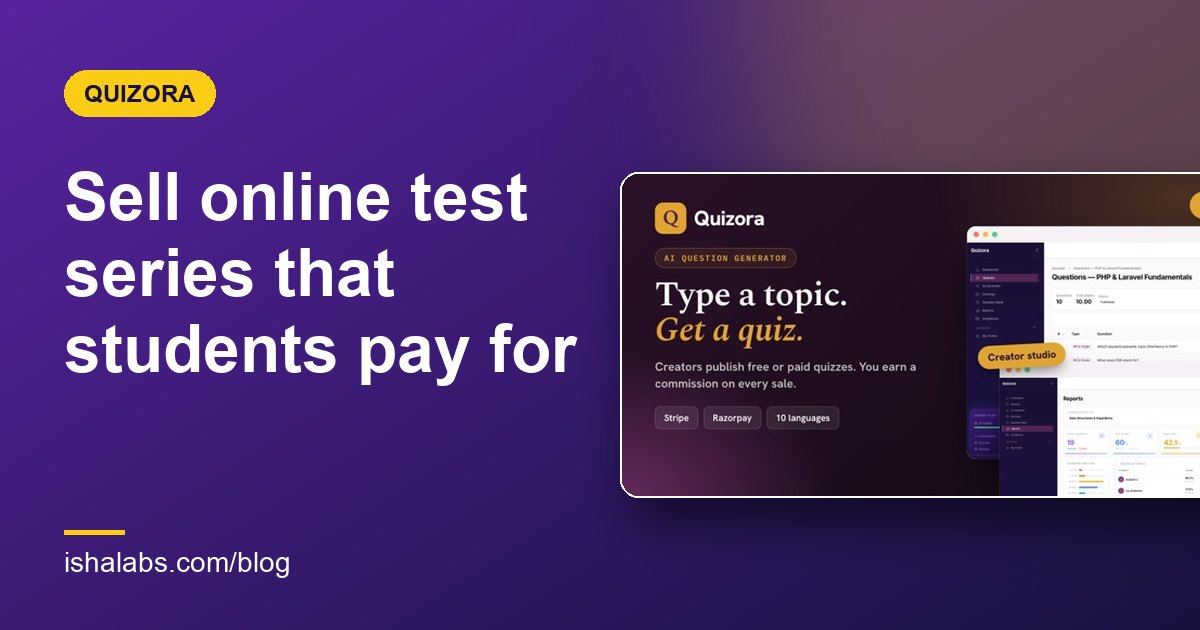
You can see the violation report for yourself in the Quizora live demo: start an exam as the student, switch tabs a few times, then open the attempt as the creator.
Launch a paid quiz and online exam platform where AI writes the questions and learners earn verifiable certificates.