Local businesses still take bookings by phone. Here is how to sell them online booking as a monthly service, from picking a niche to signing your first ten customers.
Walk into most salons, physiotherapy clinics or tutoring centres and ask how people book. The answer is usually a phone, a paper diary or a WhatsApp chat that the owner answers between clients. That is a business opportunity: they need online booking, and most of them will pay a small monthly fee for it if someone sets it up for them.
The business model in one paragraph
You run one booking platform. Every business you sign up gets its own booking page, its own staff calendar and its own payment settings, and pays you a subscription. You do not build a separate website for each customer. You add them to the platform, set up their services and hand them a link to share on Instagram, Google Maps and WhatsApp.
Step 1: pick one kind of business first
A platform for "everyone" is hard to sell. Pick one type of business you can reach easily, and learn how they work:
- Salons and barbers: many short appointments, several staff, clients who book again every few weeks.
- Clinics and therapists: longer sessions, intake questions before the first visit, a strong need for reminders.
- Coaches and tutors: often online sessions, so a video link matters more than an address.
- Gyms and studios: group classes with a fixed number of seats.
Your first ten customers teach you which questions to ask in the booking form and which settings matter. After that, the second niche is much easier.
Step 2: set up the platform
You need software that is multi-tenant, which means one installation serves many businesses with their data kept apart. Slotara is built for exactly this. Each business gets:
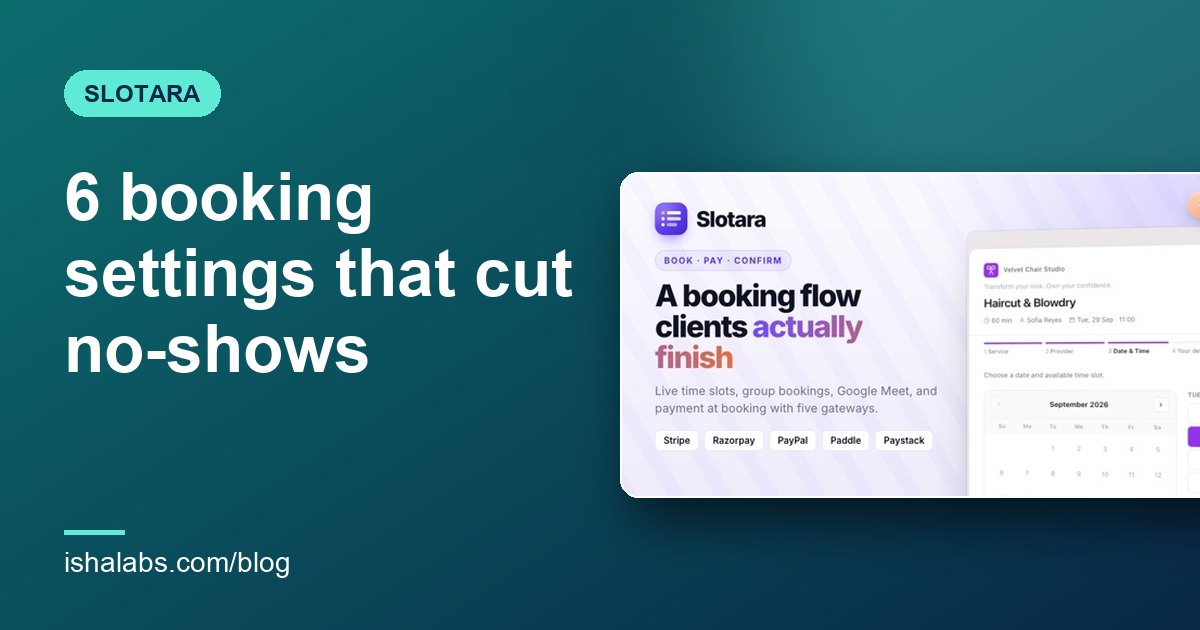
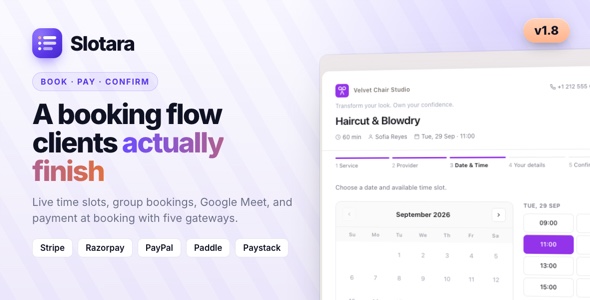
- A booking page where clients pick a service, a provider and a free time, then get a confirmation email with a calendar invite.
- Staff and provider schedules, blocked dates and a daily booking cap.
- A drag-and-drop booking form with ten field types, so a clinic can ask about symptoms and a salon can ask about hair length.
- Online payments at booking through Stripe, Razorpay, PayPal, Paystack or Paddle, or payment at the venue.
- Google Calendar sync, and Google Meet links for online services.
As the platform owner you create plans with limits (for example, number of staff or bookings), and each business can upgrade or downgrade from its own subscription page.
Step 3: price it simply
Local businesses compare your price with "free" (the phone) and with big international booking apps. Two or three plans are enough. A common pattern is a starter plan for one person, a team plan for small businesses, and a higher plan for multi-location businesses. Charge monthly, offer a yearly discount, and keep a free setup session as your selling point. That setup is what the big apps do not offer.
Step 4: sell with a live demo
Do not describe online booking. Show it. Before a meeting, create the prospect's business on your platform with their real services and prices, then open the booking page on their phone. Seeing their own name and services on a working page closes more deals than any brochure.
Good places to find your first customers:
- Businesses on Google Maps with good reviews and no "Book online" button.
- Instagram accounts that say "DM to book".
- Local business groups on Facebook and WhatsApp.
Step 5: keep them
A booking platform is sticky once clients start using it. Help your customers get there quickly: put the booking link in their Instagram bio and Google Business profile, switch on reminders, and check in after the first month with their booking numbers. A business that sees fewer empty slots will not cancel.
What to try next
You can explore everything above in the Slotara live demo. It has eight sample businesses, including a salon and a clinic, and a login for every role: platform admin, business owner, staff and client.
Run online booking for many salons, clinics and gyms from one install, and charge them a subscription.